

What might life look like on a planet orbiting a distant star? How would alien organisms adapt to unfamiliar environments? And how can art help us imagine possibilities beyond our own experience?
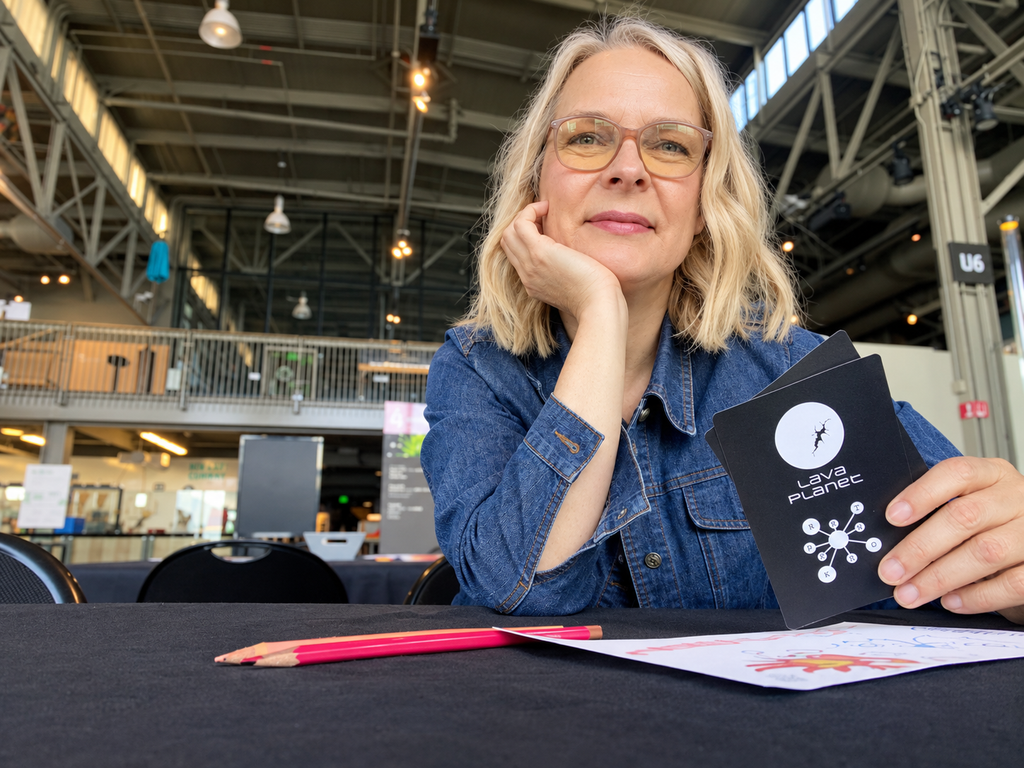
Imagine Aliens is an ongoing art-science research and education project that brings together astronomy, astrobiology, visual art, and storytelling. Developed by artist and researcher Dr. Bettina Forget, the project invites participants to imagine extraterrestrial worlds and the life forms that might inhabit them.
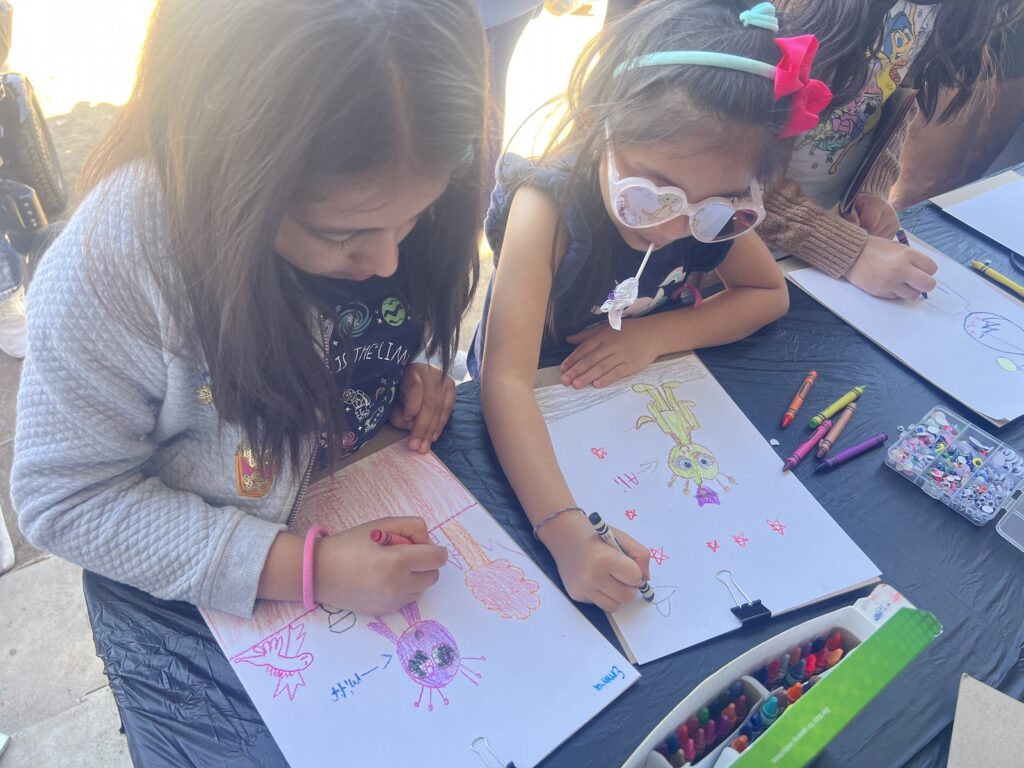
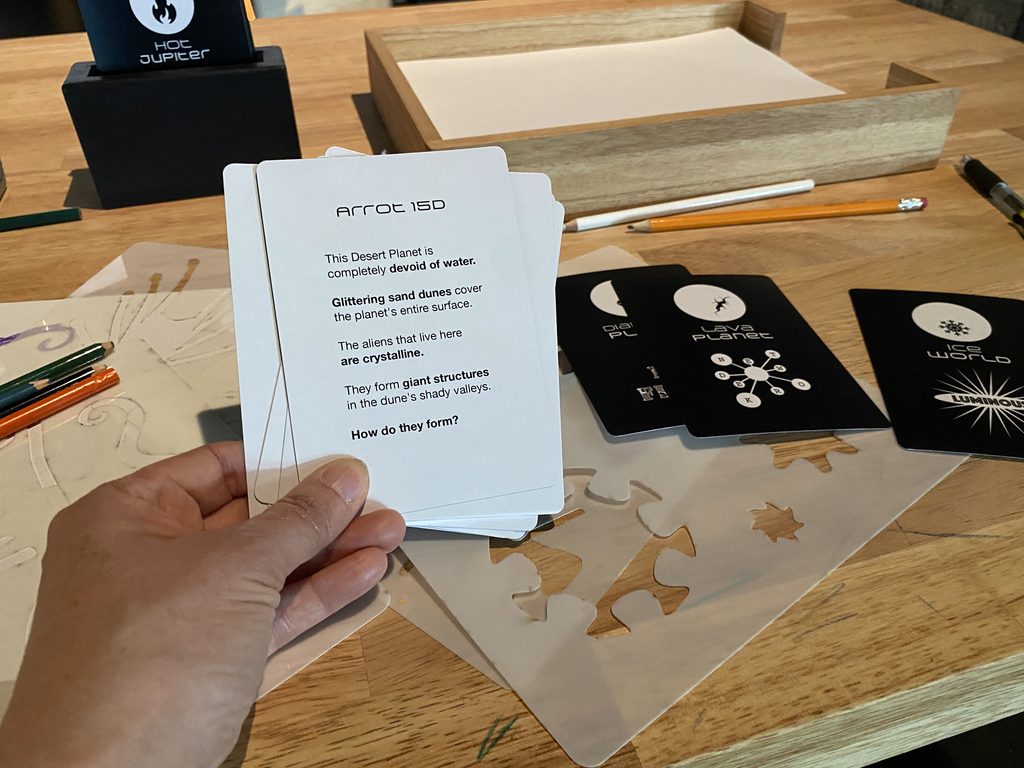
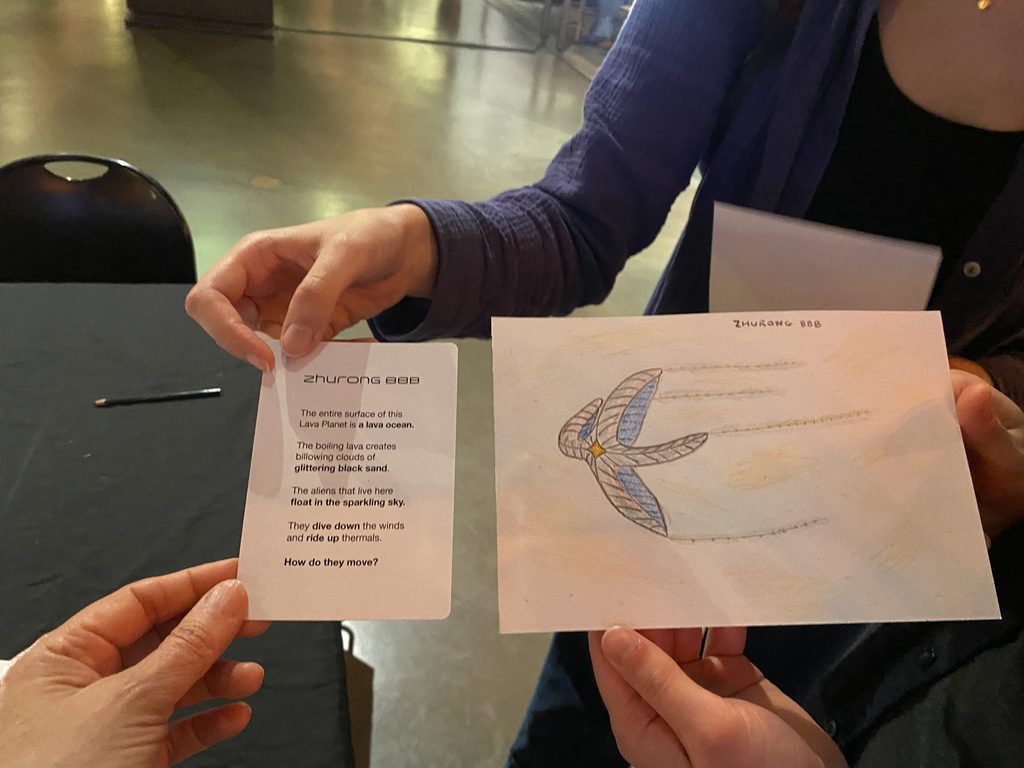
At the heart of Imagine Aliens is a collection of creative prompt cards inspired by scientific research into exoplanets and the conditions that might support life. The cards introduce unfamiliar planetary environments, biological possibilities, and speculative scenarios, providing a starting point for artistic exploration.
Science as a catalyst for creativity
Imagine Aliens approaches science not simply as information to be illustrated, but as a source of creative possibilities.
Scientific knowledge provides enabling constraints: parameters that guide the imagination while encouraging participants to move beyond familiar representations of alien life. A planet’s gravity, atmosphere, temperature, or available energy might influence how an organism moves, senses its surroundings, or interacts with its environment.
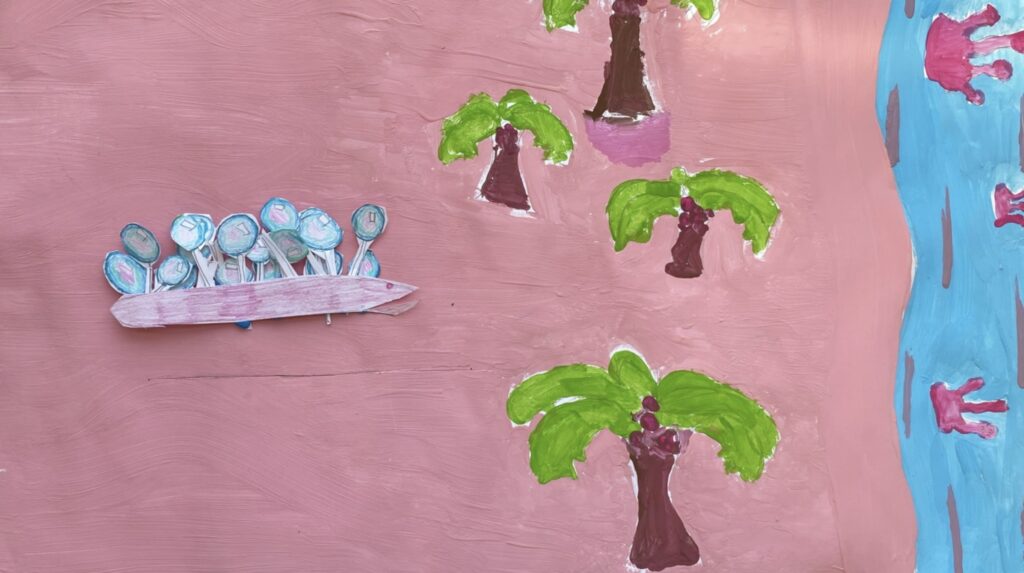
Through drawing, painting, animation, creative writing, and other artistic practices, participants translate scientific concepts into speculative worlds and life forms. The process encourages curiosity, critical thinking, and imaginative experimentation while challenging assumptions about what life beyond Earth might look like.
Rather than treating art and science as separate disciplines, Imagine Aliens creates opportunities for them to inform and transform one another.
From doctoral research to an evolving project
Imagine Aliens was developed through Bettina Forget’s doctoral research in Art Education at Concordia University in Montreal, Canada. Working with students aged 6 to 13 in three Montreal schools, the study investigated how integrating art and science could support creative inquiry, engagement with scientific concepts, and more inclusive approaches to STEM education.
Using a Design-Based Research methodology, the project evolved through successive cycles of classroom activities, observation, analysis, and refinement. Participants created imaginary planets, extraterrestrial organisms, visual narratives, animations, and interactive science-fiction stories.
The research demonstrated how scientific constraints can stimulate imaginative thinking and how artistic practices can open alternative pathways into scientific learning. It also explored the influence of popular culture, gender stereotypes, and educational contexts on the ways young people imagine extraterrestrial life.
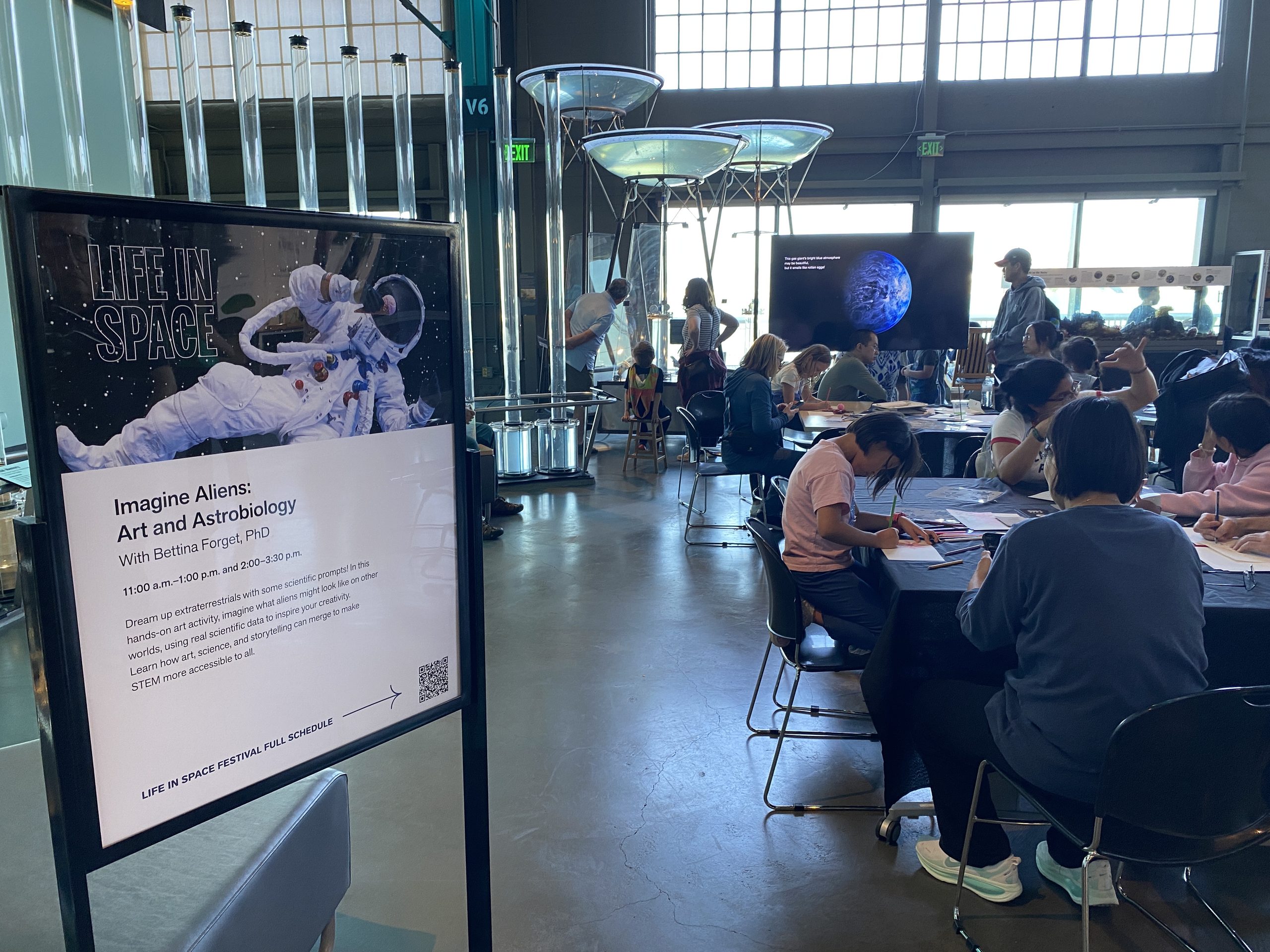
Since its beginnings, Imagine Aliens has expanded beyond the classroom through public workshops, exhibitions, and collaborations with educational and cultural institutions, including the Exploratorium in San Francisco.
Today, Imagine Aliens continues to evolve as a platform for transdisciplinary research, creative learning, and public engagement with the possibilities of life beyond Earth.
About the creator
Dr. Bettina Forget is a visual artist, researcher, and Director of the SETI Institute’s Artist-in-Residence program. She holds a Ph.D. in Art Education from Concordia University, where her research examined the intersection of art and science, transdisciplinary education, and the potential of creative practices to challenge gender stereotypes in STEM.
Her artistic practice draws on astronomy, astrobiology, science fiction, and feminist perspectives. Through research, exhibitions, and educational initiatives, she explores how artistic imagination can expand our understanding of science and our place in the universe.

Bettina’s research was supported by a Social Sciences and Humanities Research Council of Canada (SSHRC) Joseph-Armand Bombardier Doctoral Fellowship and a Renata and Michal Hornstein Doctoral Fellowship.